BNN



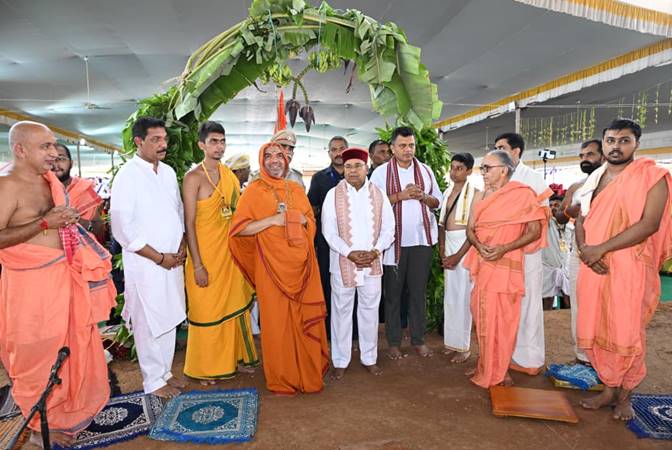
In his address, the Governor highlighted the enduring values of Indian culture, stating that it has long promoted ideals of universal brotherhood, global welfare, peace, equality and harmony. He noted that nations across the world increasingly look towards India for spiritual and mental well-being.
Underscoring the ecological wisdom embedded in Indian traditions, he remarked that nature is revered as sacred, encompassing rivers, mountains, trees, animals and birds as integral parts of the cycle of life. He added that this perspective is highly relevant in addressing contemporary environmental challenges and aligns closely with the principles of sustainable development.
Referring to the significance of the temple, the Governor said that Hanumanagiri is not only a religious destination but also a centre for spiritual peace, cultural enrichment and social inspiration. He recalled the belief associated with the Treta Yuga that a fragment of the Sanjeevini mountain carried by Hanuman fell at this site, giving it sacred importance. The place, often referred to as "Dakshina Ayodhya" of Karnataka, symbolizes the divine bond between Rama and Hanuman, reflecting ideals of devotion and righteousness.
Describing the event as a milestone, the Governor said the inauguration of the Gopura and Mantapa, along with the Brahma Kalashotsava, represents a vibrant celebration of India's eternal faith, culture and spiritual heritage. He observed that these architectural structures stand as enduring symbols of devotion, tradition and cultural consciousness, and inspire individuals to pursue spiritual growth through discipline, dedication and service.
He further noted that the Brahma Kalashotsava, marked by sacred rituals and Vedic chanting, has infused the region with renewed spiritual energy while reinforcing the values of unity, harmony and moral responsibility in society. Emphasizing the role of temples, he said they serve not only as places of worship but also as centres of cultural preservation, social guidance and intergenerational connection.
Reflecting on the symbolism of temple architecture, the Governor stated that the towering Gopura represents the heights of faith, the depth of devotion and the continuity of cultural traditions. He described Hanuman as a powerful symbol of strength, devotion and selfless service, noting that the Panchamukhi (five-faced) form signifies courage, wisdom, loyalty and dedication.
Quoting from the Ramcharitmanas by Tulsidas, he reiterated that true fulfilment lies in service to a higher purpose. He added that the life and ideals of Lord Rama continue to inspire adherence to truth, righteousness and dignity, even in challenging circumstances.
The Governor also stressed that Indian culture is eternal and has been preserved through the efforts of saints, sages and acharyas over centuries. He called upon citizens to further strengthen cultural and spiritual values and to actively engage in philanthropic activities for societal well-being.
The function was attended by several dignitaries, including Raghaveshwara Bharathi Swamiji of Shri Ramachandrapur Math and Member of Parliament Captain Brijesh Chauta, among others.